

The Original American Cheeses
Forget that processed stuff that comes in individually wrapped slices. Many different types of cheese are uniquely American; we’ll help you find the finest American cheeses.
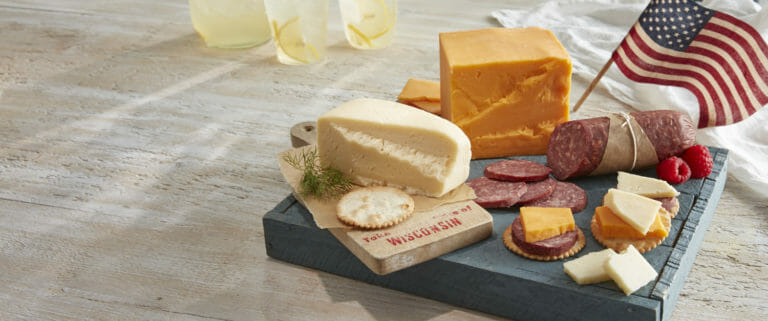
What do you think of when you hear the term “American cheese”? Chances are it’s a thin, uniformly square slice wrapped in plastic and destined for a kid’s grilled cheese sandwich or a fast-food cheeseburger. You may even like it; the USDA estimates that, of all the different types of cheese sold in America, up to a third is processed cheese. And that, according to Cheese.com, is exactly what American cheese is. American cheese is processed cheese made from a blend of milk, dairy fats and solids, emulsifying agents (typically sodium citrate) with other fats and whey protein concentrates. Actual processed American cheese is white, but food coloring is added to give it the color we all know it by. The manufacturing process was invented by James L. Kraft in the 1910s and mass marketed as “American cheese” in the following years, most notably as “Kraft singles.”
So, is American cheese actually real cheese? No! Because it is not 100% cheese, American cheese cannot be called “cheese” in America: it’s known as “pasteurized process cheese food.”
So why does this ersatz product get labeled as “American cheese”? After all, there is no such thing as “Italian cheese” or “French cheese” or “Swiss cheese”…OK, yes, there is a “Swiss cheese,” but not in Switzerland. (More on that later.) But clearly, we can do better. And we do. America’s cheesemakers know how to make world-class cheese, and they want to change the way you think about U.S.A. cheese.

Rooted in Europe…Perfected in America
America’s cheesemaking tradition originated in Europe and came over with the first immigrants. In fact, the original American cheese is Cheddar. The English immigrants brought their prized cultures and traditional cheesemaking techniques along with them, and the rest is history.
Of course, as more and more immigrants arrived from more and more European countries, they brought more and more cheesemaking techniques with them. Eventually, America’s cheesemaking industry was nearly as diverse as Europe’s itself. And because these new Americans were making the very same types of artisanal cheeses they learned to make in the old country, they gave them the same names: Gouda, Emmentaler, Havarti, Brie, Edam, Gruyère, Limburger, Parmesan, Fontina…
Back home in Europe, of course, they were not impressed. To them, these New World cheese pioneers were making a lesser cheese: the milk did not come from the same cattle breeds; the cattle weren’t eating grass grown in the same soil; the terroir was just not the same. (Could a Cheddar not aged in a cave in Cheddar Gorge, England, really be a Cheddar?)

The answer, of course, is yes. Just take a look at the wine industry. Some of France’s traditional grapes have transplanted quite successfully to other soils: An Oregon pinot noir can rival those in Burgundy; a New Zealand sauvignon blanc can compare with a fine white Bordeaux; and another Bordeaux grape, malbec, is enjoying far more success in Argentina than in its homeland, where it’s hardly even planted anymore. The terroir may not be the same—and isn’t—but that doesn’t mean it’s inferior. An Australian shiraz tastes far different from the syrah (same grape, different name) grown in France’s Rhône Valley, but which one is better? That’s highly subjective.
When it comes to cheese, the reinterpretation achieved by applying Old World techniques to New World ingredients can even be superior to the original. Numerous international cheese awards have proven that the best American cheeses rival the best in Europe. Needless to say, this has not gone unnoticed by the Europeans.
Having lost some of their marketing clout—and perhaps a bit of pride—food manufacturers in Europe have taken action, and are attempting to stop producers in other countries from using traditional European names for their products. Denmark is trying to protect Havarti, Switzerland its Emmentaler and Gruyère, France its Brie, and so on.
Using the wine industry as a reference again, this is not without precedent: the sparkling wine Champagne may only be made in the region of France bearing its name, and Chianti can only come from that small region of Tuscany. If the Europeans are successful with their actions in the cheese and meat industries, the results could be devastating for American producers. Soon we may see American labels declaring “Cheddar-style Cheese” or “Bologna-style Sausage.” But there are some American cheesemakers who are prepared for this, and have already started blazing their own trails.
Real American Originals
Let’s walk through some of the finest “truly American” cheeses and share their red, white & bleu stories.
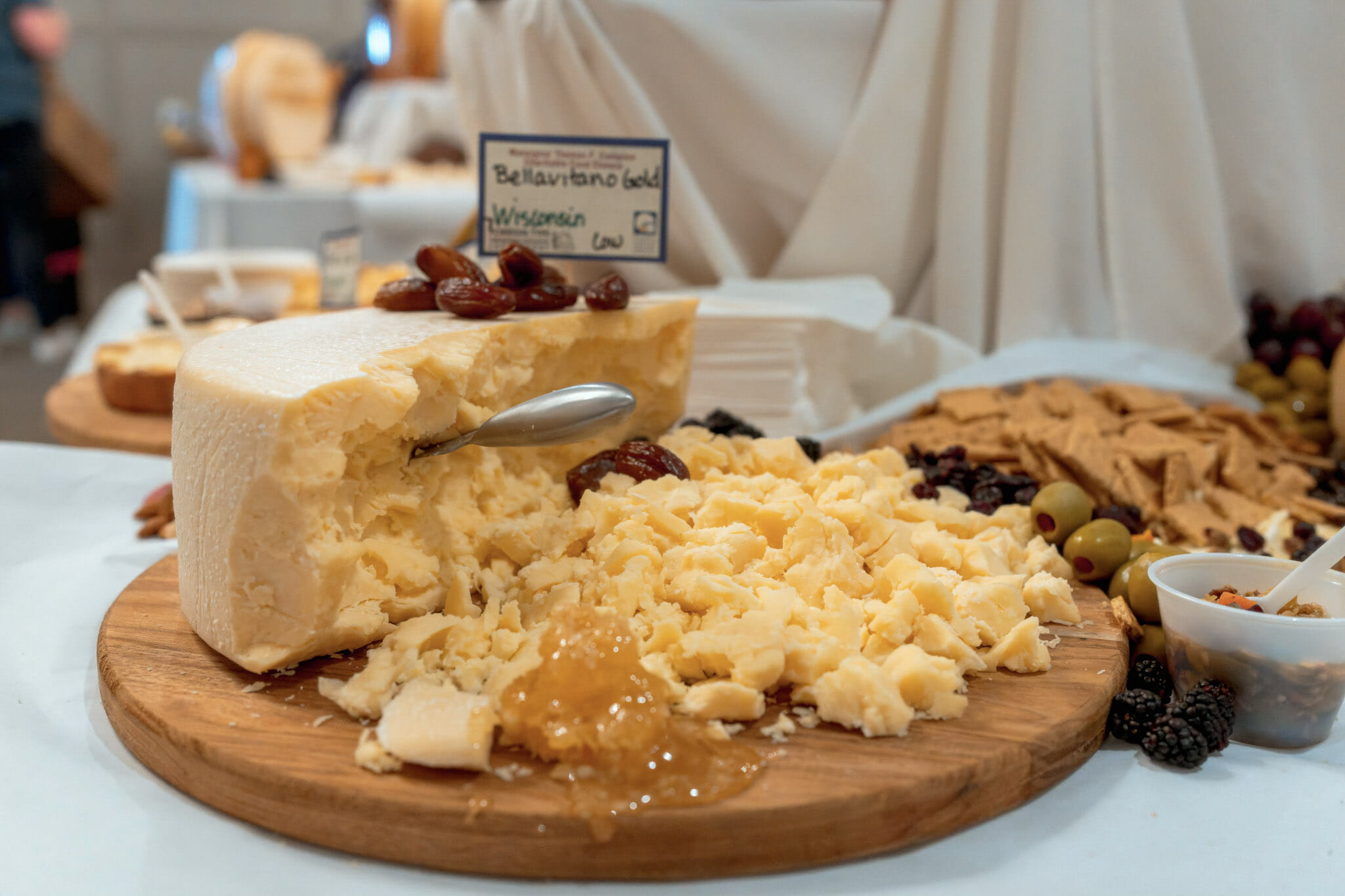
BellaVitano by Sartori
Wisconsin cheesemaker Sartori, maker of various types of Italian-style cheeses, used a different strategy. While they also sell excellent versions of Parmesan and Asiago, their flagship cheese, BellaVitano, is their very own. It’s styled after traditional Italian farmhouse cheeses, which by their nature vary from farm to farm and have no clear standard of identity. So while its ancestors may be Italian, it was born in Wisconsin…a true American original.
The above cheeses are designed to mimic styles or specific cheeses of Europe…but there are some cheese styles that are purely American.
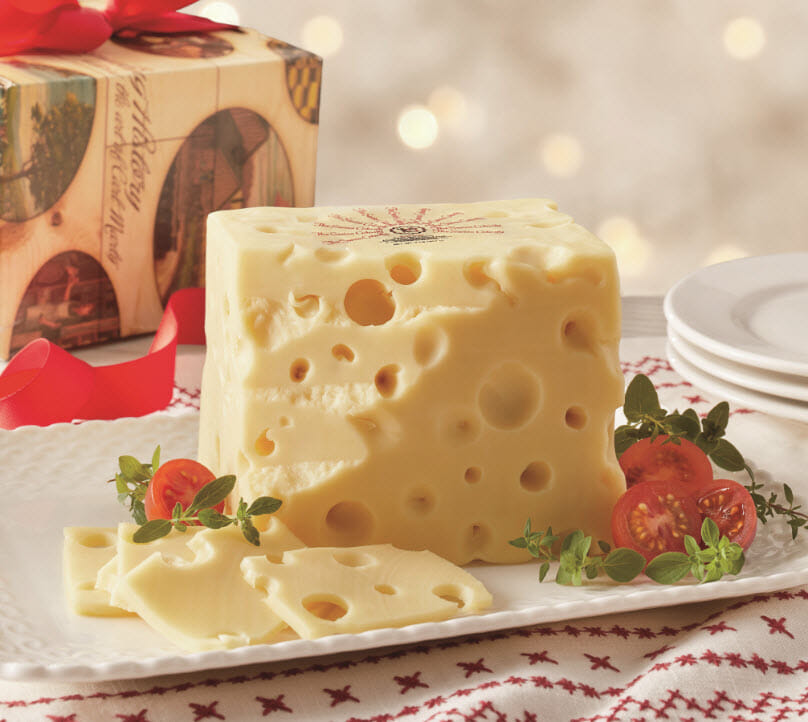
Baby Swiss
Though it may not sound like it, Baby Swiss is really an American cheese. As mentioned earlier, “Swiss cheese” does not exist in Switzerland. Instead, various Alpine-style cheeses are known by traditional names, many of them regional: Emmentaler, Gruyère, Fontina, Jarlsberg, etc. The style known as Baby Swiss was developed in America as a sort of junior version of the big, aged Emmentalers of the old country…and there is nothing like it made in Switzerland.
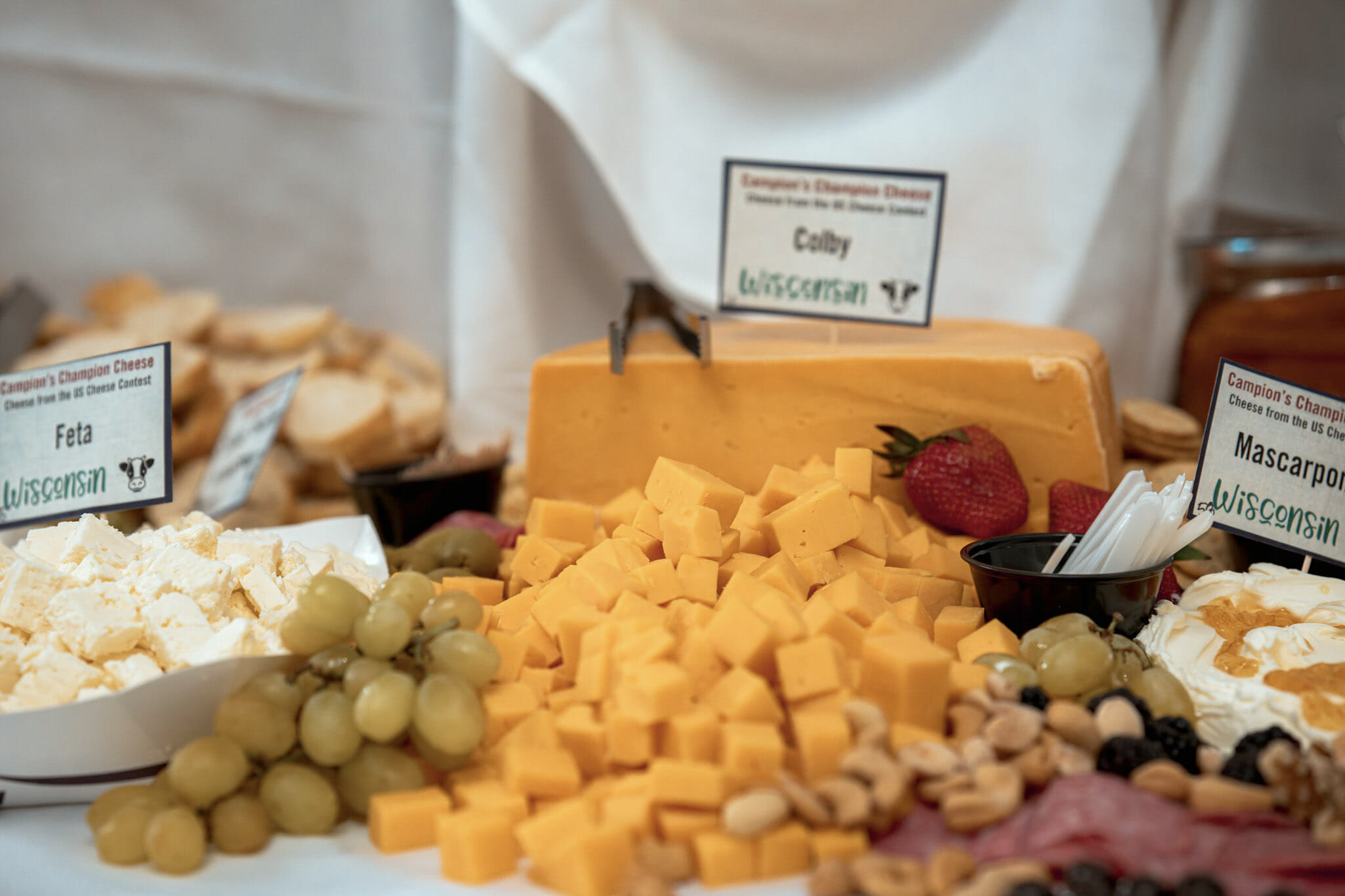
Colby
Colby, named after the small town in north-central Wisconsin where it was developed in 1874, is similar to Cheddar but does not undergo the “cheddaring” process. Reducing the acidity of the curd by replacing the surrounding whey with water results in a softer, moister, milder cheese that’s great for snacking. Naturally colored with annatto, as Cheddar traditionally is, Colby is often mixed with Monterey Jack to create a yellow-and-white marbled cheese (marble jack or Co-jack) that’s used for shredding or snacking.
Monterey Jack
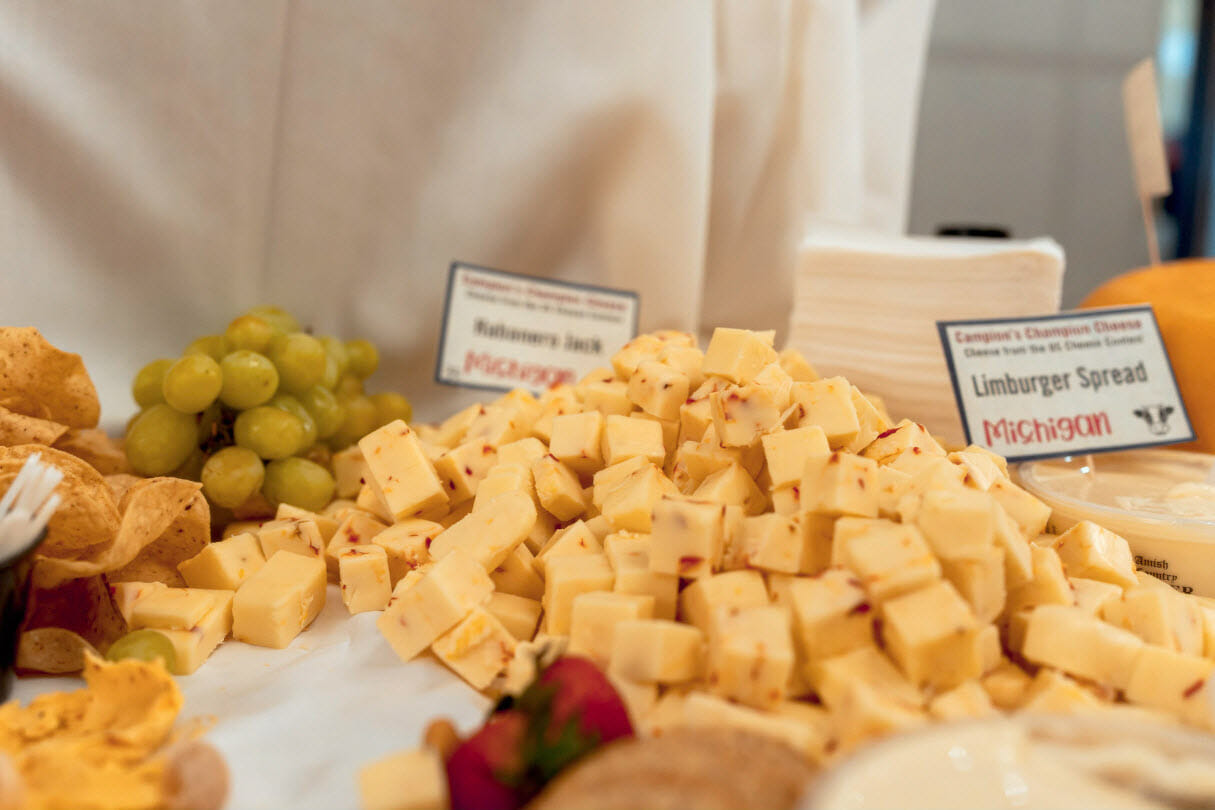
Monterey Jack itself is an American original. It was first made by Mexican friars in Monterey, California, in the 1800s and first sold by an entrepreneur named David Jack. Because of its Mexican-American origins, it is often used in place of traditional Mexican shredding cheeses in a variety of Tex-Mex recipes, and is generally the first choice for flavoring with hot peppers to create spicy snacking cheeses, like Pepper Jack.
Grand Cru by Emmi Roth USA
Emmi Roth USA, based in Monroe, Wisconsin, for years marketed its award-winning Grand Cru cheese as “Grand Cru Gruyère,” but—perhaps because its parent company is in Switzerland—recently dropped the traditional Gruyère designation. With a boatload of international awards in its trophy case, Grand Cru had certainly made a name for itself with consumers, so the transition probably was not as painful as it would be for producers of other European-style cheeses in America.
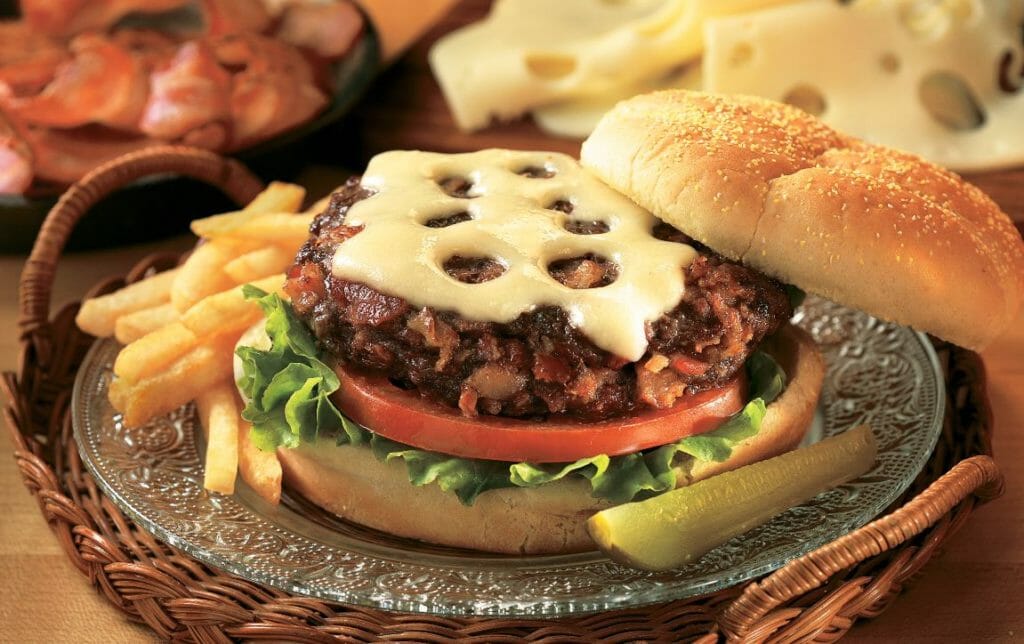
If it seems like these all-American cheeses are just riffs on European styles, yes—they probably are. But remember that America is a melting pot—a fondue, if you will—of mostly immigrants. And concepts that originated elsewhere can take on a new life and a whole new character when reinvented with American ingredients and ingenuity.
So when you’re celebrating an American holiday by grilling up a hamburger (named for a German town, but invented in America) and you want to give it the crowning touch, don’t reach for that plastic-wrapped “pasteurized process cheese food.” Instead, top it off with a slice of REAL American cheese!
More from Wisconsin Cheeseman Blog
4 responses to “The Original American Cheeses”
-
Really well written article, thank you!
-
Interesting and informative. Glad someone made the effort to educate the masses.
-
Good article–thanks!
Leave a Reply